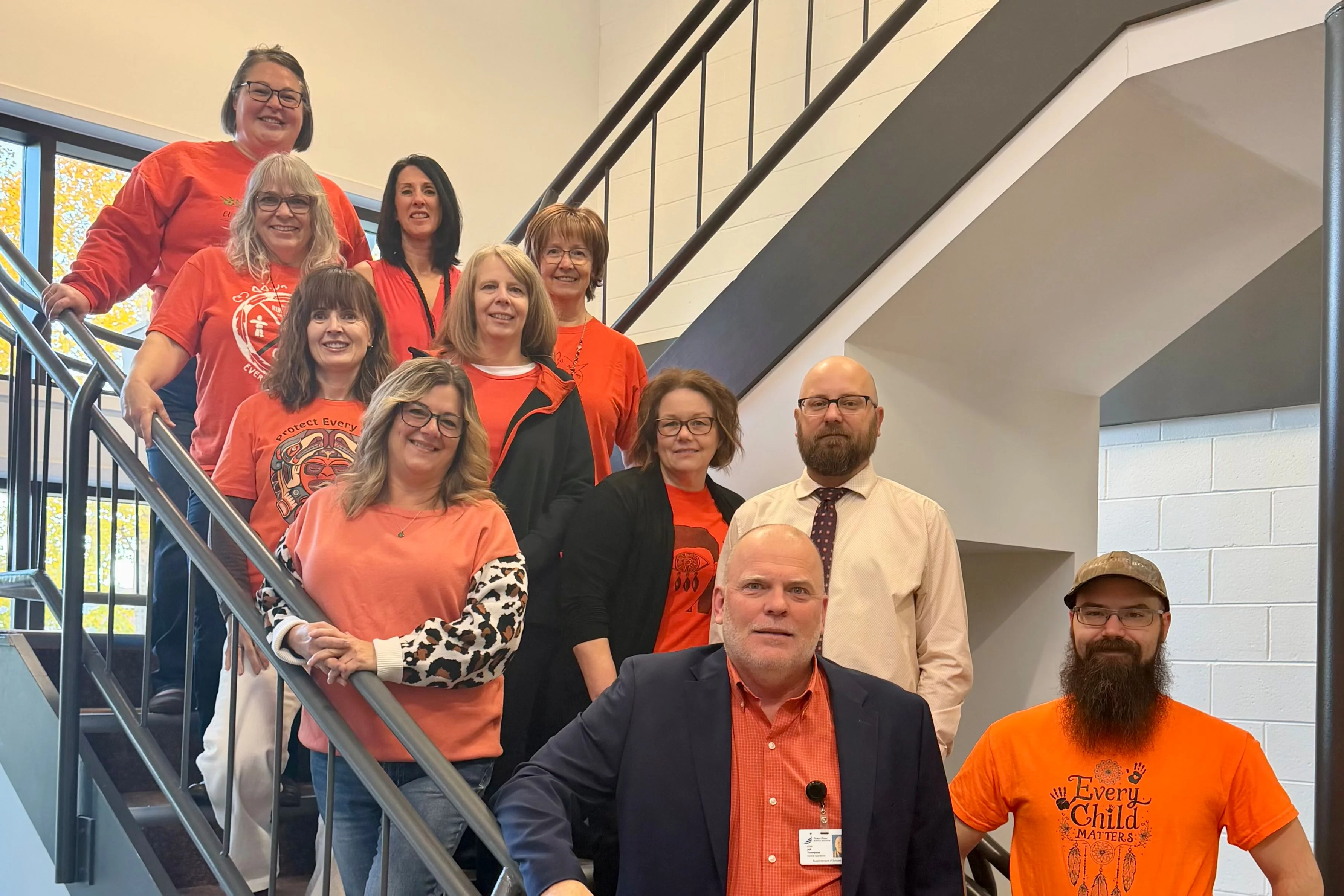
Truth and Reconciliation Week in PRSD Schools
Today, Peace River School Division students and staff are wearing orange in honour of the Survivors of Canada's residential schools and the children who never came home. Additionally, through a Board motion, the Division has annually designated this week as Truth and Reconciliation Week, a time for schools to learn, reflect, and talk about the history and ongoing impacts of residential schools.
Orange Shirt Day began in 2013, inspired by the story of Phyllis Webstad, an Indigenous woman who had her new orange shirt taken from her on her first day at residential school. What started as one person's story has grown into a movement that honours Indigenous Peoples and celebrates resilience. While Orange Shirt Day is on September 30, that day is also the National Day for Truth and Reconciliation, a federal statutory holiday established by the Government of Canada in 2021. Because it falls on Wednesday this year, our schools are observing Orange Shirt Day today.
The last residential school in Canada closed just 30 years ago, in 1996, and the legacy of the residential school system continues to affect language and identity, family and cultural bonds, traditional teachings, and physical and mental well-being across generations. These effects are still felt by families and communities in our area, across Alberta, and throughout Canada.
Within the geographic area our Division serves today, the St. Augustine Residential School operated from July, 1900 to October 1907. You can learn more through the National Centre for Truth and Reconciliation archives.
Throughout this week, schools across the Division have been engaged in their own ways to learn and reflect. Elementary students have completed various creative projects such as cross-stitched orange shirts. Other schools have held special assemblies where students share what they have learned. Schools have worked to develop their own meaningful and local land acknowledgements, along with many other activities. Together, these experiences help students understand and reflect upon Indigenous history, and better understand their own role in building a more respectful future.
This can be a difficult and emotional time for many in our communities. As we reflect, we ask that everyone do so with respect, understanding, and care for the experiences of others.
To learn more about Canada's residential schools, visit the National Centre for Truth and Reconciliation at https://nctr.ca/