
Indigenous Education
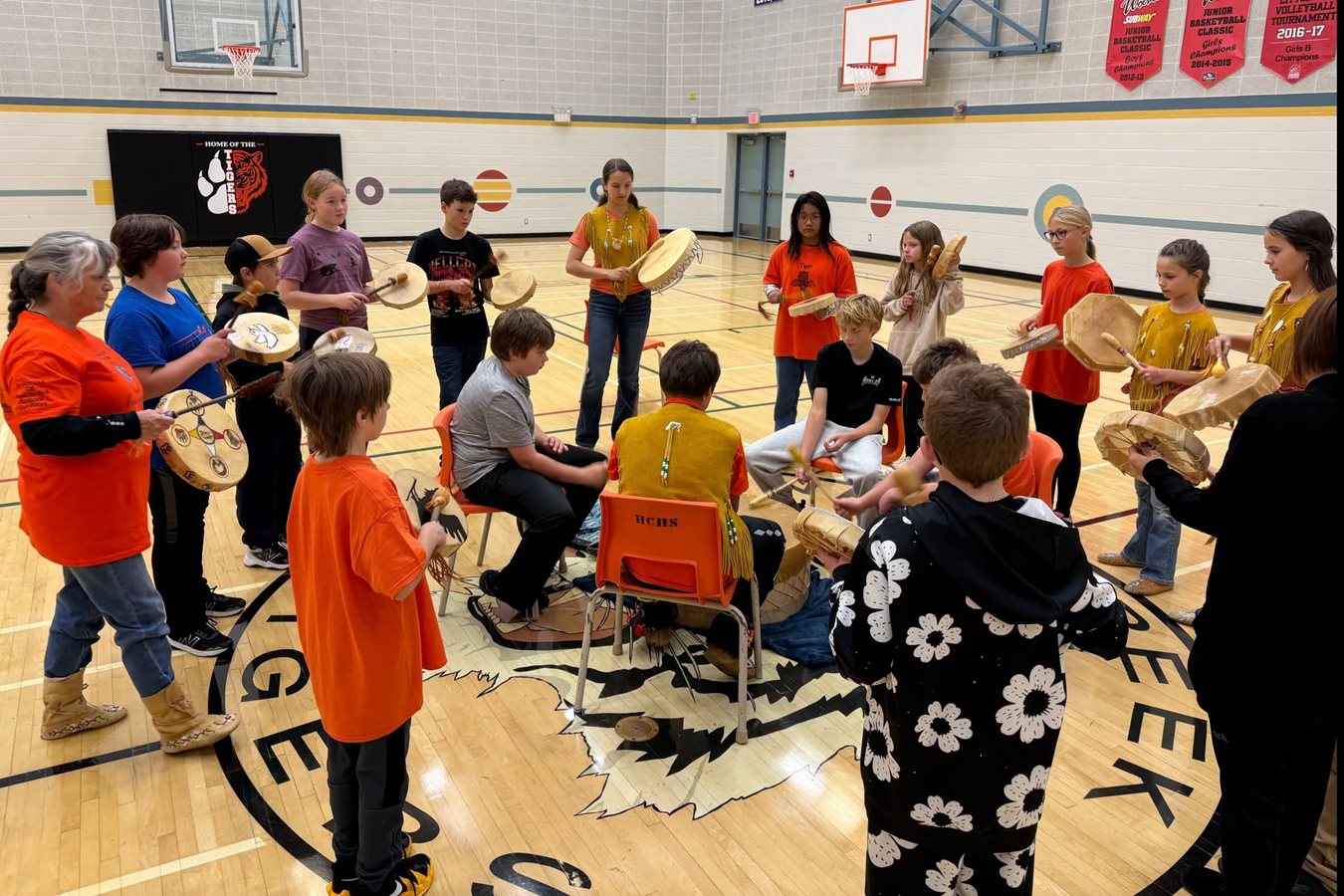 At the Peace River School Division, First Nations, Métis and Inuit culture, history and traditions are woven throughout our core and complementary courses, helping all students build awareness and understanding as a regular part of their learning.
We work to connect students and staff with the history, culture and perspectives of Indigenous peoples, with particular attention to the Nations and communities local to our region. This work is done in a culturally appropriate way that honours protocol and reflects genuine respect, helping to inspire pride in our Indigenous students.
Supporting Indigenous Student Success
Responsibility for supporting Indigenous education is shared across the division. All PRSD staff carry this responsibility as part of their professional standards under the Teaching Quality Standard (TQS), Leadership Quality Standard (LQS), and Superintendent Leadership Quality Standard (SLQS). Student Success Facilitators are specifically tasked with supporting Indigenous student success, and our Division Learning Coordinators assist in this work as well.
Division Goals, programs and initiatives include, but are not limited to:
- Providing ongoing professional development for all PRSD teachers
- Supporting teachers and administrators in naturally weaving Indigenous ways of knowing, cultures, histories and languages into the classroom and school on a regular basis
- Developing whole-school activities recognizing Orange Shirt Day, Métis Week, and Indigenous Peoples Month
- Encouraging land-based learning experiences and Indigenous studies classes
- Participating in regional events such as the Aboriginal Youth Career Workshop
- Partnering with community agencies to increase services for students
- Honouring our Indigenous graduates with the opportunity to participate in an Eagle Feather Ceremony
Accountability and Reporting
 As a condition of receiving a Truth and Reconciliation Support funding allocation, a student-self-identified funding allocation, and a school and community demographic funding allocation, PRSD is required to annually and publicly report on:
- The total of all three grant allocations received;
- How the PRSD supports self-identified students on their academic journey and what impact these efforts have on student success; and
- How the PRSD is addressing the Truth and Reconciliation Commission recommendations for the broader learner community and the impact of those activites.
Effective November, 2026, this reporting will be included annually in the PRSD's Annual Education Results Report (AERR), helping ensure transparency and accountability to families and the communities we serve.
Why Self-Identify as Indigenous?
The Government of Alberta provides funding to support First Nations, Métis and Inuit education through three grant allocations. One of these, the student self-identified allocation, is provided directly based on the number of students who self-identify as First Nations, Métis or Inuit, and is intended to provide supports that enhance educational outcomes and wellbeing for those students specifically.
When a family declares their child's Indigenous ancestry, PRSD receives additional funding tied to that declaration, which directly supports programming for self-identified students. These supports include:
- having Elders and Knowledge Keepers involved in our schools;
- land-based learning opportunities;
- student mentorship and leadership programs;
- family and community engagement events;
- graduation and transition supports;
- Indigenous learning resources and classroom supports;
- professional learning for staff; and
- additional language, culture and identity-based opportunities.
Frequently Asked Questions
Student self-identification is a voluntary process that allows families to identify a student as First Nations, Métis, or Inuit on school registration forms
No, self-identification is completely voluntary.
No. Alberta Education does not require proof of Indigenous ancestry, status, membership, or citizenship. Identity is determined by the individual student and family.
Alberta Education uses self-identification information to:
- Understand the number of Indigenous students in Alberta schools
- Monitor educational outcomes
- Help address systemic education gaps
- Support accountability and reporting
- Provide funding to school authorities to support student success
Student information is protected under Alberta privacy legislation, including POPA (Protection of Privacy Act), the Education Act, and the Student Record Regulation. Information is stored securely and only accessed by authorized personnel.
The PRSD uses Indigenous funding to support:
- Student success and achievement
- Attendance and engagement initiatives
- Cultural learning and land-based experiences
- Graduation and transition supports
- Elder and Knowledge Keeper involvement in schools
- Family and community resources
- Professional learning for staff
- Truth and Reconcilation initiatives
No. Self-identification does not affect student programming, placement, or access to services. It simply helps school divisions better understand and support student needs.
Yes. Families may review or update registration information any time by contacting their school office.
Self-identification helps ensure that school divisions can continue to provide culturally responsive supports, meaningful learning opportunities, community connections, and resources that contribute to student success, belonging, and wellbeing.
Elder's Message
"Many people should bring their wisdom to the schools to help their children be successful with their learning."